
Team Building in Hong Kong: How to Choose the Right Activity
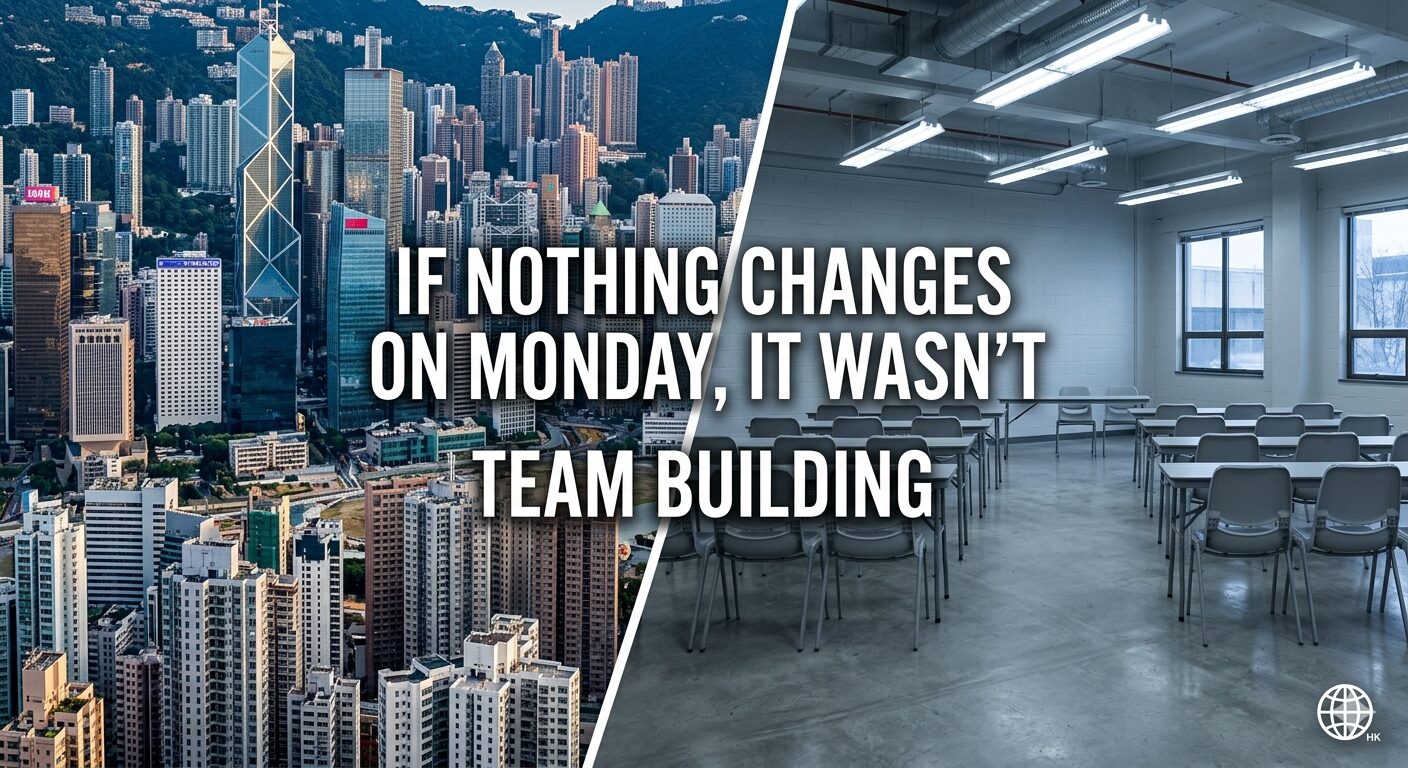
Retention pressure, burnout signals, and hybrid disconnect have made “one‑off fun” hard to justify in Hong Kong. This article sets out a practical way to choose team building that supports wellbeing, collaboration, and measurable ROI.
Contents
From Activity to Impact: Choosing Team Building That Works
Organising a corporate team building session in Hong Kong often comes with high expectations and real constraints. Hybrid work, where people divide their time between the office and working remotely, means teams are not always together in the same place. This changes how connection and collaboration happen compared to traditional in‑person settings.
With tight schedules and stretched teams, senior leaders increasingly ask one direct question: what will this actually change?
Whether the session is part of a regional conference, a leadership offsite, or a team reset, the goal is rarely “just a fun break”. In Hong Kong’s fast‑paced business environment, team building is expected to strengthen alignment, rebuild energy, and support performance without adding pressure.
This guide offers a practical framework to help HR and business leaders choose a team building activity that fits Hong Kong’s working reality, delivers clear outcomes, and feels like a credible investment in people.
Hong Kong HR priorities right now
HR teams in Hong Kong are selecting team building more carefully than ever because expectations have shifted. Retention is under pressure, wellbeing is increasingly treated as a business risk, hybrid work can weaken cross‑team connection, and budgets are scrutinised more closely.
A useful starting question is simple:
if people step away from work for this session, what should work better when they return?
Summary Table (Hong Kong HR focus)

Setting the objective
Clarity on purpose makes every decision easier. When the “why” is clear, the “what” usually follows. Common objectives for teams in Hong Kong include:

A simple way to lock the objective is to complete this sentence:
After this session, the team should be better at…
Why team building choices matter more now
Team building does not happen in a vacuum.
In Hong Kong, employees are increasingly sensitive to how organisations invest in people. Long hours, high performance expectations, and hybrid working mean that any “people initiative” is judged quickly. A poorly chosen activity can feel like extra demand rather than support.
A well‑designed one can strengthen trust, clarity, and energy without adding strain.
This is why Hong Kong leaders increasingly favour shorter programmes, clear outcomes, and visible ROI, rather than long, loosely defined activities.
1. Understanding your team
An activity can look impressive and still miss the mark if it does not match the team’s reality.
i. Culture and identity
The best team building choices feel like a natural extension of how the organisation already works.

The key test is credibility. The activity should feel appropriate for the room, not performative.
ii. Team maturity and group dynamics
The same format can feel very different depending on where the team is in its lifecycle.

iii. Hybrid working patterns and cross‑team connection
Hybrid teams often work well within their own group but lose connection across teams over time.

iv. Participant expectations and comfort
Even the best design loses impact if it does not respect comfort levels.

2. Indoor or outdoor: choosing the right setting in Hong Kong
Weather is less of a constraint in Hong Kong than in many regions, but logistics and time pressure matter more.
Indoor formats
Ideal when schedules are tight, senior leaders have limited availability, or the session is embedded in a conference. Indoor environments allow focus, consistency, and efficient use of time.
Outdoor or city‑based experiences
Suitable when timing allows and a change of environment would help reset energy. Short outdoor or city‑based sessions can reduce conference fatigue while staying focused. These formats work best when locations are close and easy to access, such as Ma Wan Park – Noah’s Ark, which offers organised outdoor space without complex logistics.
Flexible exploration
City‑based challenges that run 90 to 120 minutes, can start from the company premises, and stay close to major venues often deliver strong engagement without logistical stress.
3. Venue and logistics: practical details that protect the experience
In dense cities like Hong Kong, venue constraints often matter more than the activity choice. Programmes work best when they are designed around the available space, time, and participant needs, rather than following a fixed format.
Group size and space
Meeting space in Hong Kong is scarce and expensive, so the venue often determines the format.
When only a small room is available, choose a programme that fits the space and does not need much movement or large set‑ups.
An in‑office session is often the most efficient option when the priority is to protect time and control costs. Some groups also use practical venues such as sports clubs or restaurants with private areas when additional space is needed without booking a large meeting room.
Time and agenda fit
An in‑office session reduces travel time and helps keep the agenda stable when schedules are tight.
Many programmes can be run as an in‑office session at the end of the working day, making effective use of one to two hours without disrupting the broader agenda.
Location and access
Ease of access matters in Hong Kong. A venue near an MTR station and within walking distance of the main office, hotel, or event venue helps people arrive on time and start with the right energy.
When participants are visiting from regional offices, venues near the airport area, or on a direct route from the airport, reduce transfers and make arrivals and departures smoother.

Five questions that sharpen the decision
• What should people feel afterwards: closer, clearer, safer, or simply entertained?
• Which hidden issue is costing the most right now: silos, low trust, slow decisions, burnout signals, or lack of belonging?
• Which behaviours need to become normal again?
• If asked “what did this change?”, what would be a confident answer?
• Does this feel like a real investment in people, or just a calendar event?
Quick selection guide

FAQs
What is the best team building activity in Hong Kong?
There is no single best option. Start with the outcome you want, then match the format to your team’s culture, comfort level, and schedule.
How long should a session be?
For conferences, 60 to 120 minutes works well. Half‑day sessions suit leadership alignment and deeper team development.
What works best for hybrid teams?
Formats that intentionally mix roles and create structured collaboration tend to deliver more value than informal bonding.
How does team building support retention?
By strengthening trust, recognition, clarity, and healthier ways of working, not by adding pressure.
Should we run this internally or use a professional provider?
Internal delivery can work for simple sessions. For larger groups, sensitive dynamics, or when outcomes matter, professional design and facilitation reduce risk.
Closing
Effective team building in Hong Kong is rarely about finding the most exciting activity. It is about making choices that fit the reality teams are working in, including time pressure, venue constraints, hybrid working patterns, and high-performance expectations.
When objectives are clear and the format is shaped around real space, time, and participant needs, team building becomes more than a one‑off event. It becomes practical support for how people collaborate, make decisions, and manage pressure once they return to work.
For organisations planning conferences or leadership sessions in Hong Kong, these considerations are often discussed early during programme design, where small decisions can significantly influence whether the experience feels worthwhile or disruptive.
Connect with Bruno on LinkedIn
If you’d like to exchange perspectives or explore how these insights apply to your organization, Bruno welcomes professional dialogue and experience‑sharing.


